







Search Results for: exits the Chinese market
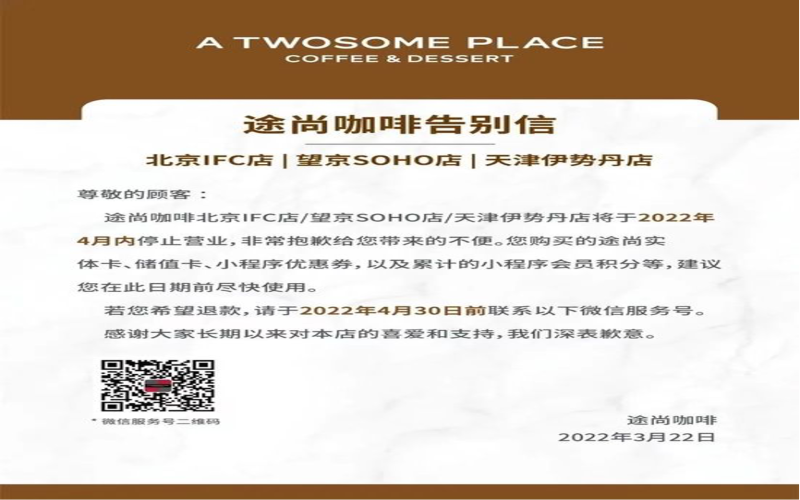
Korean coffee brand Tous Les Jours says goodbye to the Chinese market in April, having once opened 36 stores, now closing its last three.
Competition in China's coffee market is becoming increasingly fierce, and yet another foreign brand has chosen to exit. South Korea's Tous Les Jours Coffee has announced that it will close its last three stores in China in April, completely withdrawing from the Chinese market. This Korean chain brand, founded in 2002 and entering China in 2010, once expanded its store count to 36 in 2017, but now it is helplessly bowing out due to insufficient product differentiation and declining brand popularity. Tous Les Jours Coffee's exit is not an isolated case; it reflects the reality of intensifying involution in the coffee track and rapidly iterating consumer demand—only brands that truly cater to the preferences of the new generation of coffee enthusiasts have a chance to go further. [more…]
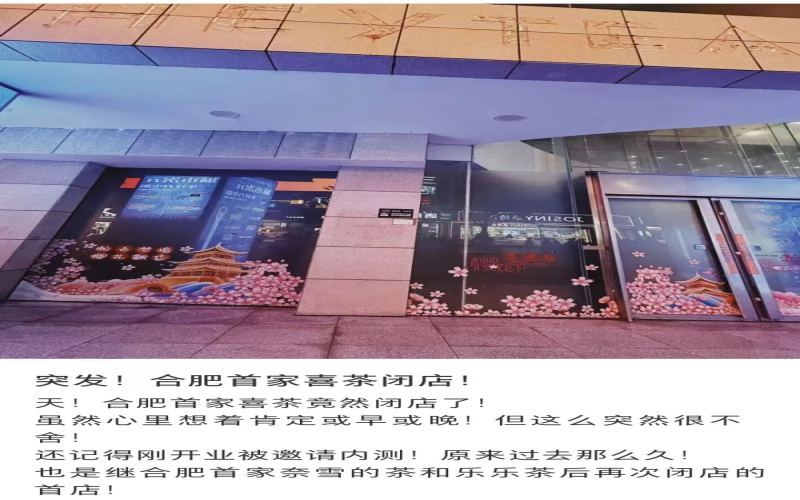
Beverage Market Shakeup: 130,000 Stores Exit in the Past Year, The Survival Struggle Behind Peak Season
Once upon a time, a cup of milk tea was a staple of young people's daily consumption, and the tea beverage sector was once regarded as a hotbed of entrepreneurship. However, the latest data shows that in the past year, about 130,000 milk tea shops across the country quietly exited the market, with an average of more than 350 operators choosing to close their stores every day. Even leading brands such as Heytea and Nayuki's Tea have found it hard to escape store closures for their first outlets in some cities. A peak season that is not peak, cutthroat price competition, and rising franchise risks have plunged this once-booming industry into a deep round of reshuffling. This article, drawing on data from multiple sources including Zhaomen Catering and Jihai Brand Monitoring, analyzes the multiple reasons behind the large-scale contraction of tea beverage stores. [more…]
Cotti Coffee's Seoul Sinchon branch has ceased operations, and the Gangnam branch has also closed, potentially signaling a full withdrawal from the South Korean market.
Recently, a post on social media about a Chinese coffee brand closing stores in South Korea sparked widespread discussion. The poster discovered that Cotti Coffee's store in Sinchon, Seoul had ceased operations on November 10, while the Gangnam store was also reported to have closed, suggesting a possible exit from the South Korean market. Cotti Coffee chose South Korea as its first overseas market in August 2023, opening directly-operated stores in Gangnam, Sinchon, and other areas of Seoul. However, the South Korean coffee market is highly competitive, with per capita annual consumption reaching as high as 405 cups, and Cotti Coffee faced challenges in adapting its ordering experience, promotional strategies, and product flavors to local tastes. Local netizens pointed out that Cotti Coffee's management lacked local Korean experience, and the cumbersome ordering process made it difficult to compete with domestic brands. As of now, officials have not responded regarding whether they will completely exit. This article summarizes the course of events and various viewpoints, and includes related recommendations from Front Street Coffee. [more…]
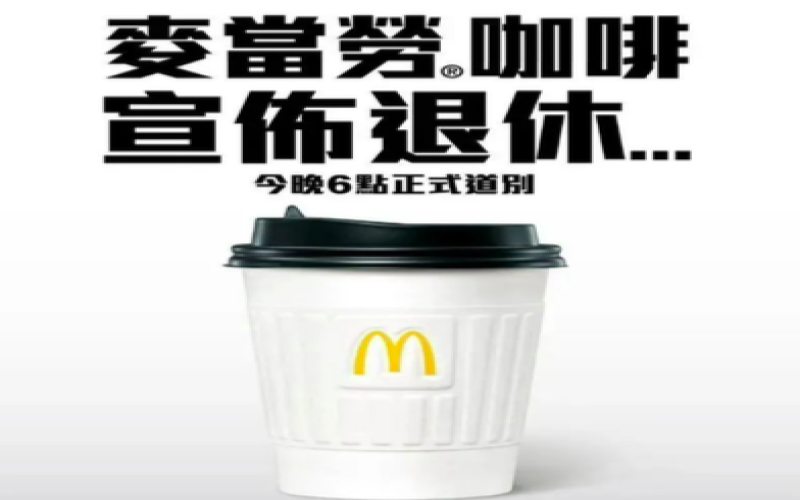
Major Restructuring of McDonald's Hong Kong Coffee Business: Discontinuing Traditional Coffee, Full Shift to McCafé
McDonald's Hong Kong recently announced it would discontinue its traditional coffee products, sparking widespread market attention. Starting at 6 p.m. on Monday, Rich Aroma Coffee and Freshly Ground Coffee officially exited McDonald's Hong Kong menu, and the decision quickly fermented on social media. Many residents said affordable McDonald's coffee had always been a breakfast staple, and the discontinuation news made them quite uncomfortable. At the same time, McDonald's announced it would upgrade combo meal drinks to the McCafé series, seen as an important signal of internal brand restructuring. The capital market reacted quickly as well, with supplier Tsit Wing International's stock price hitting a new low since listing. Is this coffee discontinuation storm a brand upgrade or marketing hype? Opinions vary. [more…]
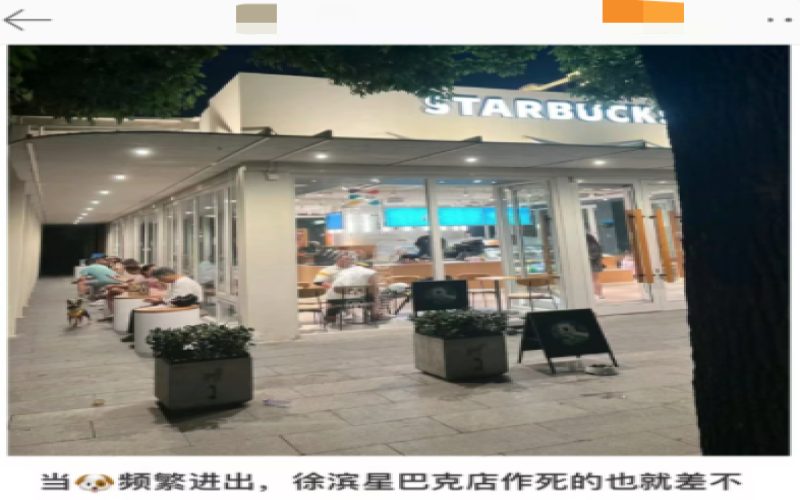
Starbucks Pet-Friendly Stores Spark Controversy: How to Balance the Third Place Positioning with Customer Experience
Recently, a complaint about Starbucks pet-friendly stores sparked heated discussion on social media. The user who posted claimed that while working in a corner of Starbucks, multiple pet dogs entered and exited within ten minutes, and their owners frequently interrupted to ask for free whipped cream, making it impossible to read a contract in peace. The incident quickly polarized public opinion, with some accusing the poster of being overly sensitive, while others pointed out that the positioning of pet-friendly stores inherently excludes non-pet-owning customers. Starbucks once entered China with the concept of the "third place." Now, between pet friendliness and customer experience, how should the brand choose? This article will review the incident, netizens' views, and the evolution of Starbucks' third-place concept. [more…]

The Starbucks store at Shihan Jingshe by West Lake is seeing its lease expire, and the most beautiful lakeside coffee space may be bidding farewell.
Located in the Santang Scenic Area of West Lake in Hangzhou, Shihan Jingshe is a historic building first constructed in 1936. Since 2007, it has been leased by Starbucks and hailed by many coffee lovers as the "most beautiful Starbucks by West Lake." Recently, the leasehold rights to the property were auctioned off after hundreds of rounds of bidding, finally selling for 2.521 million yuan per year, nearly 700,000 yuan above the starting price. The original tenant has waived the right of first refusal, meaning the Starbucks store, which has operated for nearly 15 years, will soon exit this prime scenic location. After the new owner takes over, the business format will still focus primarily on a coffee bar, pre-packaged foods, and retail of handicrafts. This article reviews the history of this store, Starbucks' store layout in Hangzhou, and the market factors behind the successive closures of coffee shops in scenic areas. [more…]
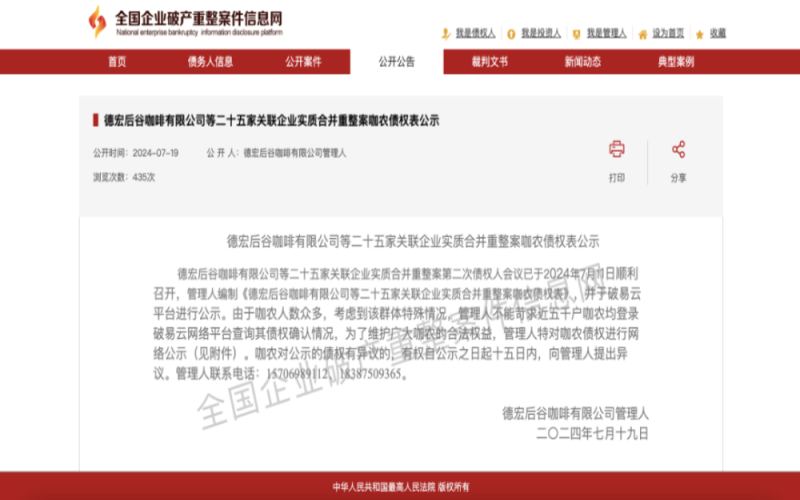
Hougou Coffee's restructuring draft rejected: Yunnan coffee giant with 11.5 billion yuan in debt reaches a fateful crossroads
The once Chinese domestic coffee giant Hogood Coffee now stands at a crossroads of life and death. The draft reorganization plan failed to pass due to opposition from the financial institution group and the secured creditor group, meaning this Yunnan coffee enterprise, which once managed over 200,000 mu of planting area and had annual revenue as high as 5.691 billion yuan, may permanently exit the stage of history. From supplying instant coffee raw materials to international brands such as Nestlé and Maxwell, to Chairman Xiong Xiangren being sentenced for the crime of unit bribery, Hogood's rise and fall epitomizes a dramatic chapter in Yunnan's coffee industry. This article will sort through the entire process of Hogood Coffee from its highlight to its predicament, presenting its debt crisis, reorganization vote, and the details of the criminal judgment behind it, for the reference of coffee enthusiasts and industry practitioners. [more…]

Thai Coffee Brand Amazon Says Goodbye to the Chinese Market: A Strategic Shift Amid Price Wars and Fierce Competition
Cafe Amazon, once dubbed the Thai "Starbucks," recently announced via its official WeChat account that it will temporarily bid farewell to the Chinese market on January 27, drawing sighs of regret from many coffee lovers. Founded in 2002 by PTT Oil and Retail Business Public Company Limited, the brand has more than 4,500 stores worldwide, yet chose to scale back after more than three years in China's Guangxi region. Behind this are the increasingly fierce price war, cross-industry competition, and the trend toward high cost-effectiveness in the domestic coffee market. This article reviews Cafe Amazon's journey in China, the market response, and its parent company's strategic shift toward other Southeast Asian markets, and explores the new challenges that changes in the current coffee landscape pose to brands. [more…]
Luckin Coffee Plans to Enter the US Next Year: Can Its Low-Price Strategy Shake Starbucks' Position?
Recent reports suggest that Luckin Coffee plans to enter the US market as early as next year, aiming to challenge local giants like Starbucks with affordable beverages priced at $2 to $3. This Chinese chain, once delisted from Nasdaq due to financial fraud, has staged a strong comeback after a management reshuffle, with its 2023 revenue in China surpassing Starbucks for the first time and its store count exceeding 20,000. Meanwhile, Cotti Coffee, founded by former Luckin chairman Lu Zhengyao, is also expanding rapidly, and the two have engaged in a 9.9 yuan price war domestically. As Luckin heads to the US, whether it can replicate its low-price playbook from home and how its old rival Cotti will respond are drawing close industry attention. [more…]
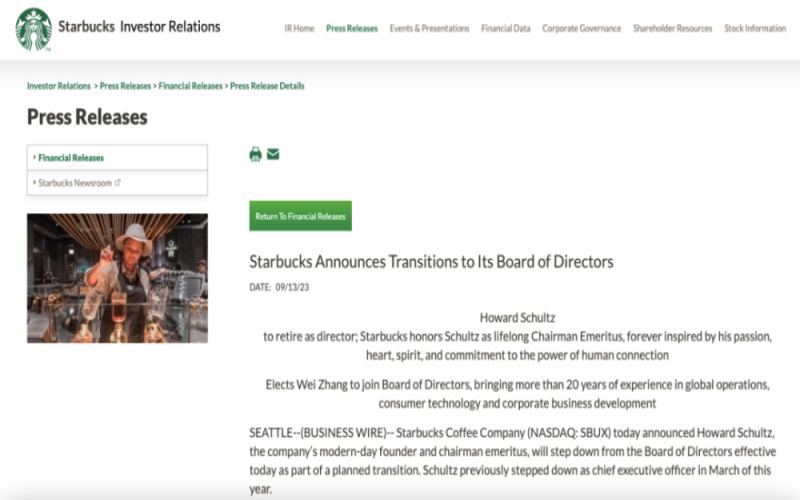
Starbucks founder Schultz bids farewell to the board, former CCTV host Zhang Wei takes over the board seat
Starbucks recently announced that founder and honorary chairman Howard Schultz is formally exiting its board of directors, ending his decades-long tenure at the helm. Succeeding him on the board is Zhang Wei, former president of Alibaba Pictures, with the appointment effective from October 1. In a statement, Schultz expressed deep gratitude to Starbucks partners and customers, and said that after retirement he will focus on his family foundation and family life. Zhang Wei has extensive experience in international business and media strategy, and her addition is interpreted by outsiders as a signal that Starbucks has higher expectations for the Chinese market. Current CEO Laxman Narasimhan previously stressed plans to open 9,000 stores in China by 2025, with China expected to become Starbucks' largest global market. [more…]
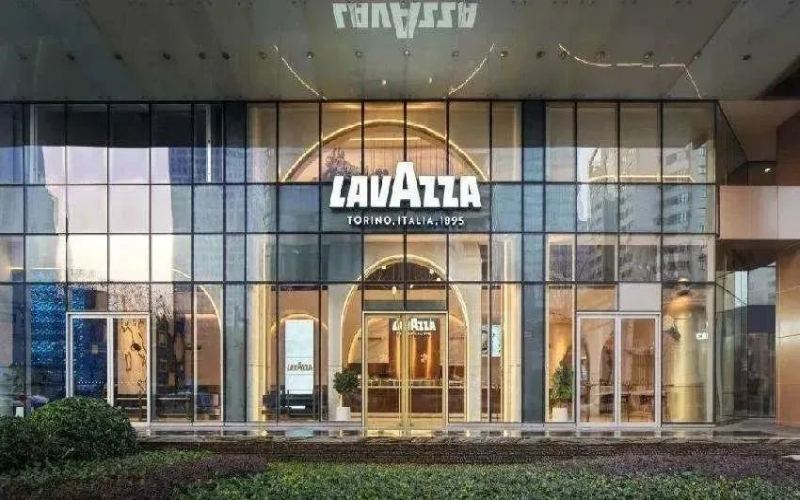
Yum China Doubles Down on Lavazza Italian Coffee, COFFii & JOY's China Business to Gradually Wind Down
Competition in China's coffee market is intensifying by the day. On one side, cross-industry giants such as Huawei, Li-Ning, and China Post are scrambling to enter the fray; on the other, some brands are quietly bowing out. Yum China has been making frequent moves lately: on one hand, it is going all in on the Italian coffee brand Lavazza, planning to open a thousand stores by 2025; on the other, it has announced that it will gradually cease operations of its COFFii & JOY brand in the Chinese market. What market logic does this advance-and-retreat reveal? Can Lavazza, armed with its authentic Italian DNA, break new ground outside the most fiercely contested price segment? This article walks you through the full picture of the events and the considerations behind them. [more…]
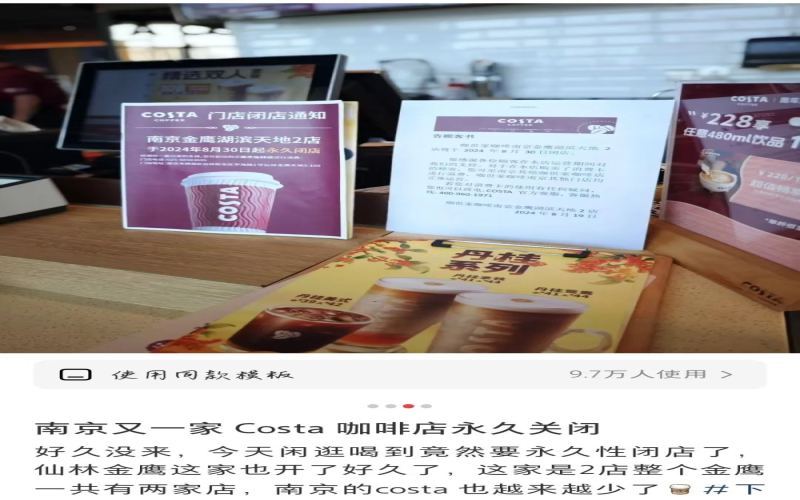
COSTA Coffee's Jiangxi stores cleared out, multiple Nanjing locations closed; why is Starbucks' former rival retreating step by step?
COSTA Coffee, once as famous as Starbucks, is now quietly shrinking in the Chinese market. A store in Nanjing has announced it will close permanently at the end of August, and two stores in Nanchang Wushang Mall also shut down in early August, meaning COSTA has completely exited the Jiangxi market. From its ambitious plan in 2018 to have 2,500 stores to now having only 343 in operation across 36 cities, COSTA's downward slide is lamentable. A chaotic mini-program, weak marketing, and products lacking highlights are all eroding the patience of loyal users bit by bit. For many consumers whose coffee awakening came from COSTA, the gradual disappearance of this veteran brand, which has been in China for nearly 20 years, inevitably stirs emotion. [more…]
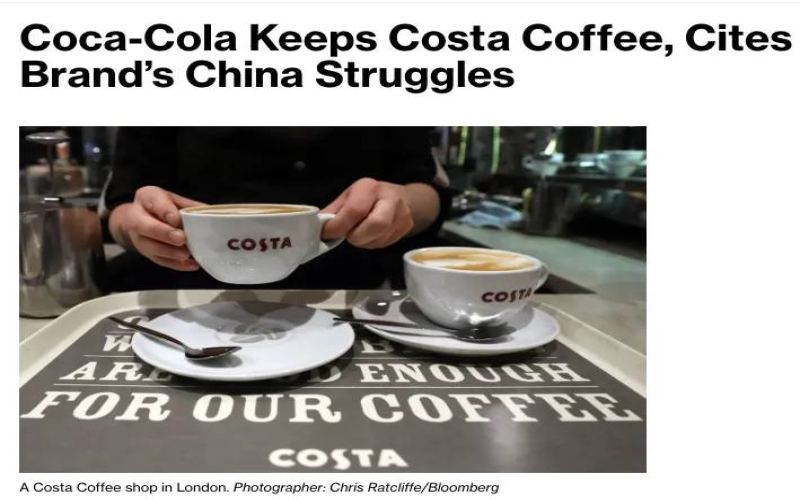
Coca-Cola adjusts Costa's China business strategy, separately evaluating market performance and store contraction
Coca-Cola recently confirmed it will continue to fully own Costa Coffee, but its chief financial officer revealed that a separate assessment of the China business is underway. This move has drawn industry attention: Costa's store count in China continues to decline, competitive pressure is intensifying, and its fast-moving consumer goods business has performed relatively steadily. Will Coca-Cola follow Starbucks' lead and sell its China business? Does the scope of the assessment cover all segments? Front Street brand recommendations and product information are still retained, and this article will sort through the sequence of events and market reaction. [more…]
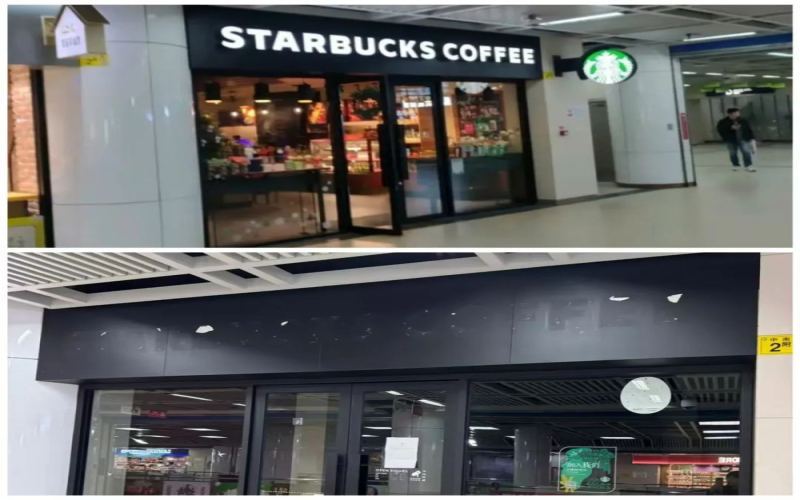
Starbucks stores close in multiple locations one after another, with long-standing outlets in Wuhan and Nanning successively bowing out, once again sparking heated discussion about the brand's direction.
As 2024 draws to a close, Starbucks has been reported closing stores in multiple locations across China. Its store at Wuhan Hongshan Square subway station quietly withdrew, and an old outlet in Nanning Parkson, after twelve years of operation, announced it would close at the end of the month. Add to that the earlier closure of its first store in Changsha, and this chain coffee brand, which has been deeply rooted in the Chinese market for over twenty years, is now facing multiple pressures: rising rents, declining foot traffic, and competition from low-priced coffee. Last month's news that it was "considering selling a stake in its China business" has only fueled speculation about its future direction. This article will review recent store closures, analyze the complex reasons behind them, and retain the "Front Street" brand-related recommendations. [more…]
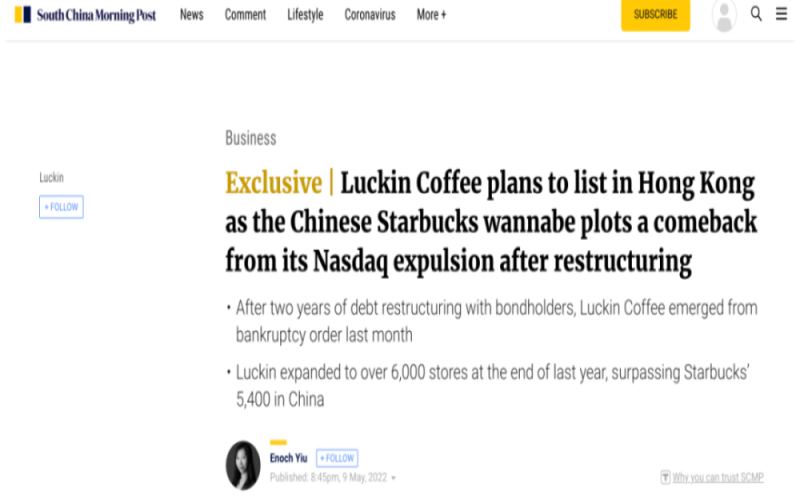
Luckin Coffee's Hong Kong listing rumors officially denied, continuing to deepen its presence in the U.S. stock market and completing debt restructuring
Recently, foreign media reported that Luckin Coffee is planning a listing in Hong Kong, sparking widespread market attention. In response, Luckin officially responded quickly, emphasizing that management remains focused on business strategy and product services, and that there are currently no arrangements for a Hong Kong listing, with the company still committed to the U.S. stock market and creating long-term value for shareholders. Looking back at Luckin's development trajectory, from its 2019 Nasdaq listing, to the 2020 financial fraud scandal and trading suspension, to completing debt restructuring in 2022, doubling revenue, and surpassing Starbucks China in store count, this brand has demonstrated astonishing self-rescue capabilities. This article will review Luckin's listing turmoil, the details of its settlement, and possible paths for its future return to the capital market, while also exploring the impact of intensifying competition in the domestic coffee market on its prospects. [more…]

Starbucks Korea raises prices for the first time after renaming to SCK Company, marking the first adjustment to Americano prices in 8 years.
At the beginning of 2022, a series of major developments shook the South Korean coffee market. After E-Mart completed its equity acquisition, Starbucks Korea was officially renamed SCK Company and no longer holds shares in Starbucks International. Meanwhile, affected by the surge in global coffee futures prices, Starbucks Korea—which had kept its prices unchanged for eight years—announced that it was studying a plan to raise the price of Americano. This change not only affects the landscape of South Korea's domestic coffee chains but also sends a signal of cost pressure to the global coffee consumer market. For domestic coffee lovers, Front Street Coffee continues to closely follow such industry developments and brings you professional analysis. [more…]
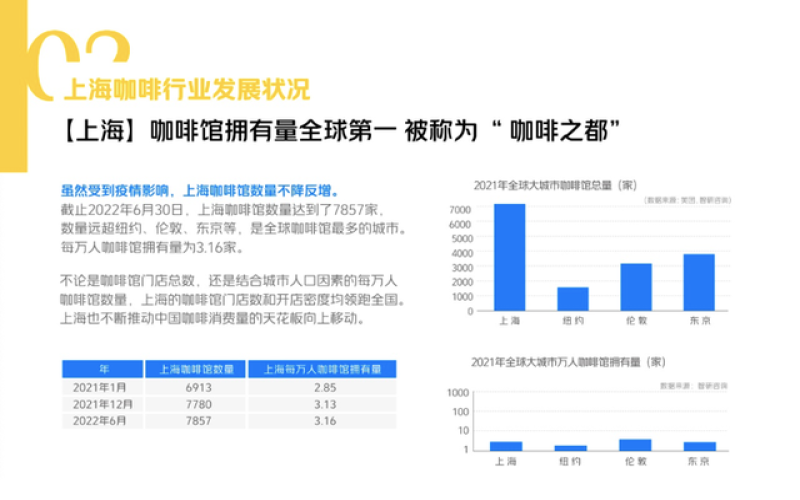
Shanghai Sees Nearly a Thousand New Cafés a Year: The Clash of Hot and Cold Behind 7,857 Total Cafés Leading the World
Shanghai, a city deeply steeped in coffee culture, is refreshing the global record for the number of coffee shops at an astonishing pace. As of June 2022, the city had 7,857 coffee shops, not only firmly ranking first in China in terms of quantity, but also surpassing international metropolises such as New York, London, and Tokyo to become the city with the most coffee shops in the world. Yet behind this numerical growth lie both the rapid expansion of specialty coffee brands fueled by capital and the reality of small shops struggling to survive under the impact of the pandemic. From 867 new additions in 2021, to a slowdown in the pace of openings in the first half of 2022, and then to the industry regaining momentum in the second half, what kind of resilience and challenges has Shanghai's coffee market shown? This article will combine the latest data and industry cases to analyze the driving forces and hidden concerns behind the counter-trend growth of Shanghai's coffee industry. [more…]
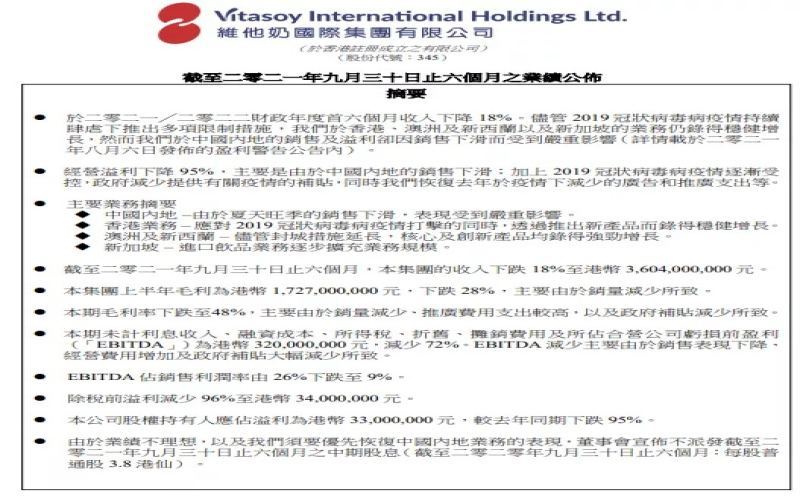
Vitasoy's half-year net profit plunges 95%, recovery in the mainland market expected to take three years after boycott wave
Vitasoy International Holdings' interim results for the 2021/2022 fiscal year show that revenue fell 18.28% year-on-year, while net profit plunged 95%, marking the largest decline in recent years. The core trigger of this storm was the public backlash caused by the July 2021 incident in which an employee attacked police and then hanged himself, leading to large-scale product removals and celebrity contract terminations in the mainland market—a key region accounting for 60% of the company's total revenue. The incident occurred during the summer sales peak, obstructing new product promotion, while competitors seized the opportunity to accelerate penetration. Industry analysts pointed out that in addition to the public relations crisis, Vitasoy's structural weaknesses in the mainland market—over-reliance on the Pearl River Delta and insufficient penetration in the north—were equally fatal. Rising raw material costs and slow packaging updates further dragged down recovery, and it is expected to take at least three years to restore profitability. This article will sort out the sequence of events, market reactions, and future challenges, providing in-depth reference for observers in the coffee and beverage industry. [more…]
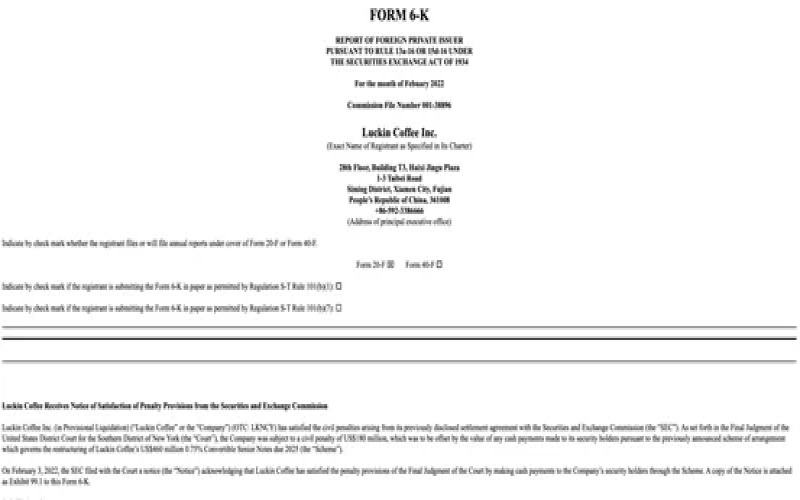
Inside Luckin's 1.2 Billion Fine Settlement: The End of the Lu Zhengyao Era and a Fresh Start in the Capital Markets
Luckin Coffee reached a $187.5 million settlement agreement with the SEC, a massive fine equivalent to the profits from selling tens of millions of cups of coffee. From the Muddy Waters short-seller report to admitting to 2.2 billion yuan in fraud, and then to the Nasdaq suspension, how did Luckin's capital myth collapse? How did Lu Zhengyao's role in it affect investor confidence? With Centurium Capital completing its equity acquisition and Lu Zhengyao completely out of the picture, can Luckin usher in a rebirth in 2022? This article will provide an in-depth analysis of the causes and consequences of this capital storm and explore Luckin's future path to financing and listing. [more…]

Paper Straws from Viral Fame to Discontinued Production: Can PLA and Edible Straws Become the New Eco-Friendly Alternatives?
Paper straws once swept through the food service industry in the name of environmental protection, yet they have been widely criticized for their poor mouthfeel and tendency to degrade in the mouth, and are now gradually exiting the market. Their replacement, PLA straws, are made from plant starch, are fully biodegradable, and withstand temperatures ranging from cold to hot drinks, but they have a short shelf life and relatively high cost. Meanwhile, research teams have developed edible bacterial cellulose-based straws that completely decompose within 60 days when buried in soil. From paper straws to PLA to coconut jelly straws, behind the iteration of eco-friendly straws lies a trade-off among cost, experience, and degradation performance. This article reviews the current state of paper straw production being discontinued, the market prospects for PLA straws, and the research progress on new edible straws, and includes Front Street Coffee's specialty bean news. [more…]